OnlyFans 340 Million Record Leak Explained: Was OnlyFans Actually Hacked?
The OnlyFans 340 million record leak sparked widespread concern online. Learn what researchers discovered, whether OnlyFans was actually hacked, what data may be affected, and how users can protect their accounts and privacy.
NEWS
By Muhammad Ibraheem • Founder of Hackers Legacy • Cybersecurity Researcher & Privacy Analyst
6/19/20268 min read
If you've been on social media in the past few weeks, you've probably seen the panic.
"OnlyFans HACKED — 340 million users exposed!" The posts racked up millions of views. Screenshots of a dark web listing circulated everywhere. People who'd never even used the platform were suddenly worried, and people who had were checking their phones with a knot in their stomach.
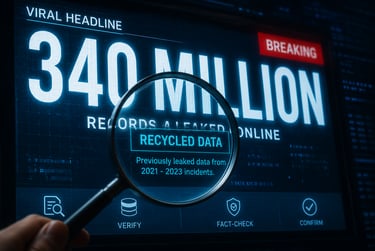
Here's what almost none of those viral posts mentioned: OnlyFans wasn't hacked.
That's not me downplaying a serious story. It's the conclusion reached by multiple cybersecurity outlets, by independent security researchers, and — remarkably — by the hacker selling the data themselves. The real story here is more interesting, more useful, and frankly more important than the headline, because it reveals a trick the cybercrime world uses constantly to scare people and sell recycled garbage.
Let me walk you through exactly what happened, what's actually at risk, and what you should do about it — whether you use OnlyFans or not.
What Actually Happened
In late May 2026, a listing appeared on a well-known data leak forum. A seller using the alias "Euphoric_Reply_5727" advertised a database they claimed contained roughly 340 million OnlyFans user records, priced at 0.313 Bitcoin — about $76,000 at the time.
The listing claimed the data was pulled from "internal OnlyFans databases" and included usernames, real names, email addresses, phone numbers, follower counts, content statistics, linked social media profiles, and even the last four digits of payment cards.
Within hours, it went viral on X. The framing was simple and terrifying: OnlyFans, the platform where anonymity is everything, had been breached.
Then the story fell apart.
The Hacker Admitted They Didn't Hack OnlyFans
When journalists at Hackread contacted the seller directly through Telegram, the entire narrative collapsed.
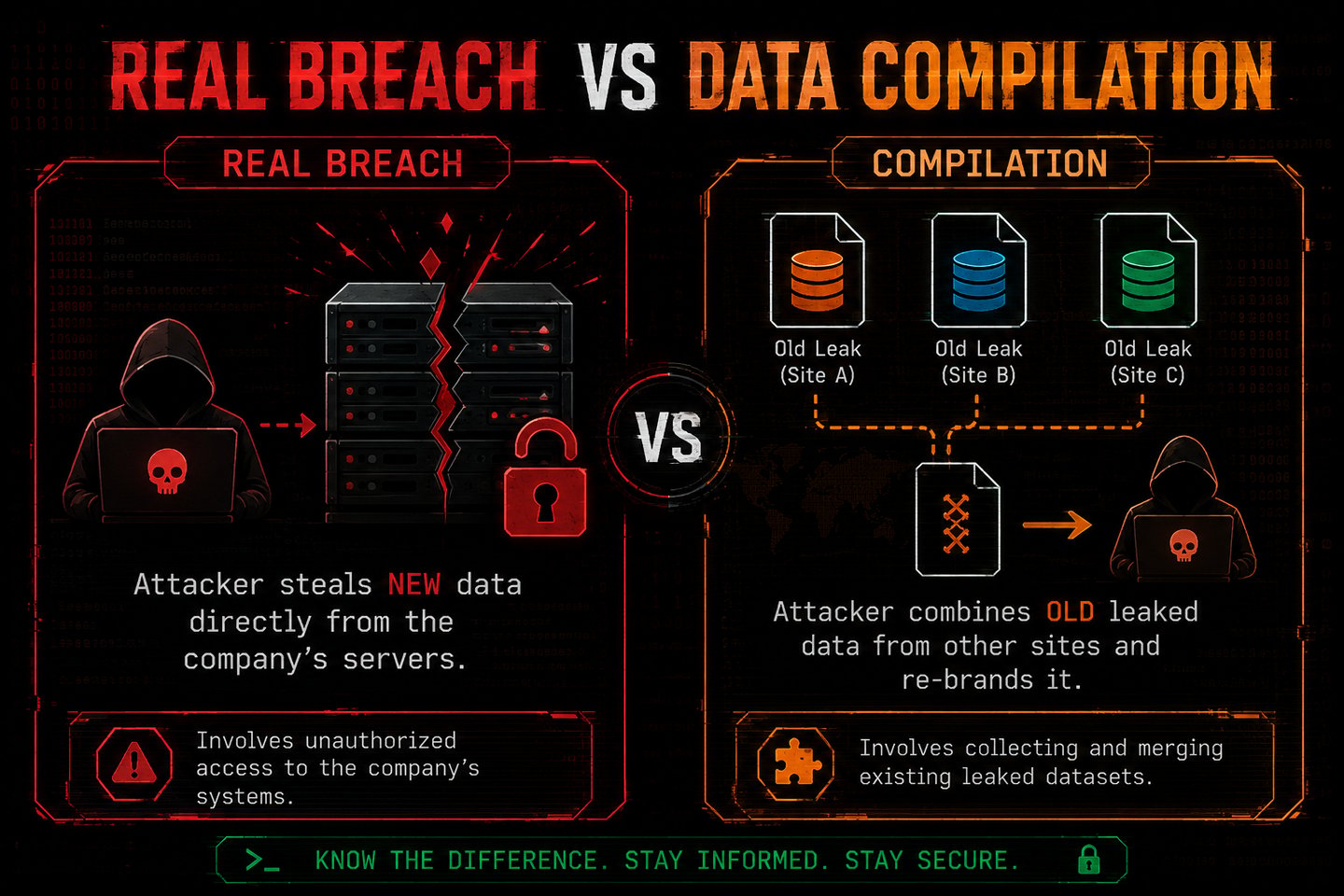
The seller plainly stated they had not breached OnlyFans at all. Instead, they explained the database was assembled by combining old data from previous leaks and public sources — pulling breached records from platforms like Twitter, Instagram, and Spotify, then matching those records against known OnlyFans accounts.
In their own words, shared with Hackread: they didn't breach or hack OnlyFans. They used existing breach and leak databases and matched them with users of the platform.
OnlyFans, for its part, told reporters the breach claims were false. The company didn't elaborate much further — but on the central question of whether their servers were compromised, both the company and the alleged hacker agreed: they weren't.
Why Experts Called It Out
The cybersecurity community didn't just take the hacker's word for it — they examined the evidence, and it raised red flags.
Researchers who reviewed the sample records noticed technical inconsistencies. Some of the data fields, like stream counts and like counts, looked like frontend API attributes — the kind of data a website displays publicly — rather than backend database columns that would come from an actual server breach. In other words, the data resembled information that was already publicly visible on profiles, not secret internal records.
The 340 million figure itself drew scrutiny too. One analyst pointed out that the number appeared to have been lifted from a third-party company's marketing material rather than reflecting an actual record count. For context, OnlyFans reported around 377.5 million fan accounts in its fiscal 2024 annual report — so "340 million" sounds plausible precisely because it echoes the platform's real scale, which may be exactly why it was chosen.
Troy Hunt, the founder of Have I Been Pwned and one of the most trusted voices in breach analysis, publicly questioned the claim. He noted that the "scrape" explanation didn't align cleanly with the types of data being advertised — unless OnlyFans were exposing personal details through public-facing endpoints, which is a different problem entirely.
Some researchers went further, suggesting portions of the dataset could even be partially AI-generated or padded with junk entries — sample records reportedly contained incomplete fields and "None" values. One well-known analyst flatly called the viral claim "fake news" and an engagement trap designed to farm views.
So Does This Mean You're Safe? Not Exactly.
Here's the nuance that matters, and it's where a lot of "debunking" coverage gets lazy.
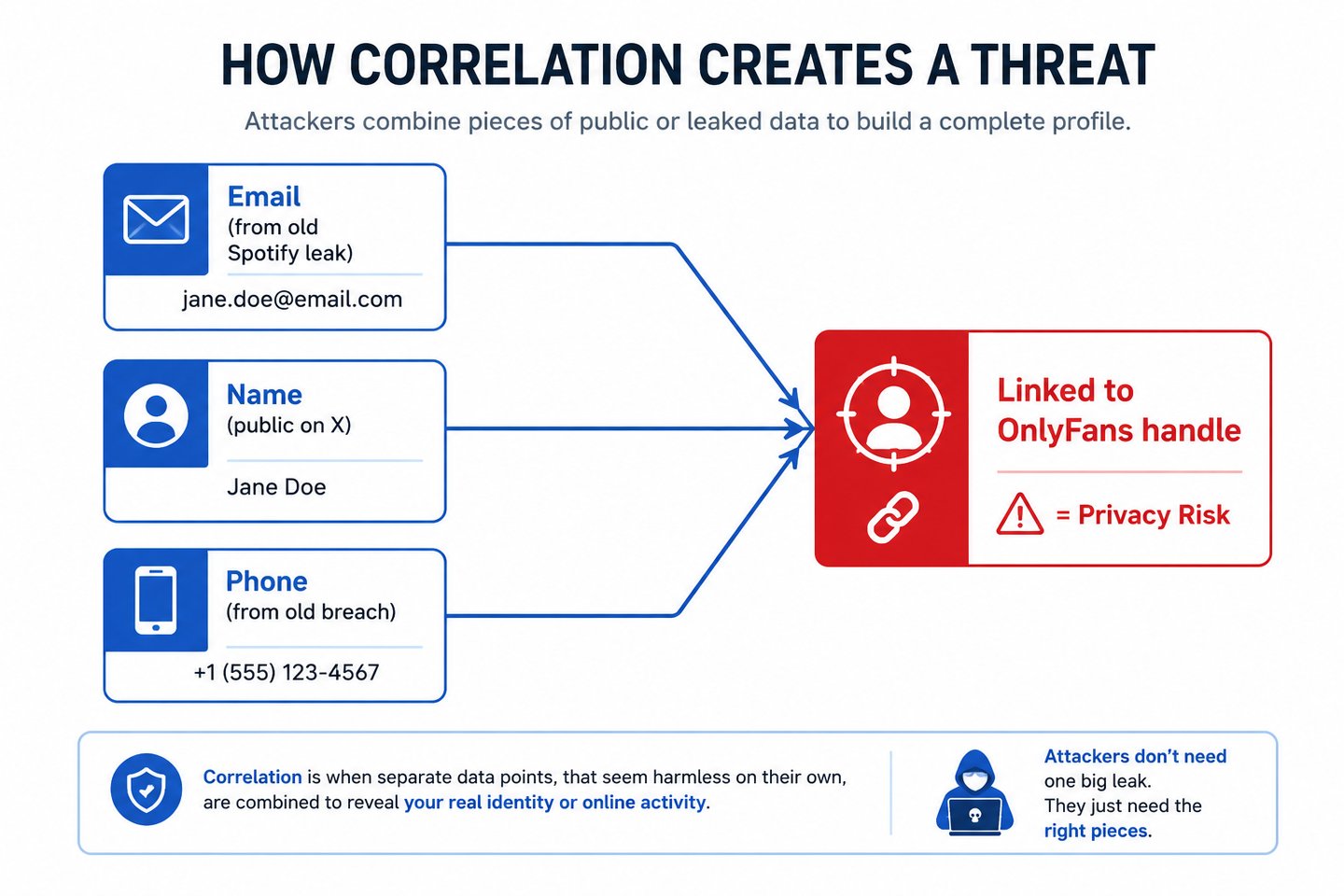
The fact that OnlyFans wasn't breached does not mean this listing is harmless. The danger here isn't novelty — it's correlation.
Think about it this way. Your email address leaking from Spotify is low-stakes on its own. Your name being public on Twitter is low-stakes on its own. But when someone stitches those together and links them to an OnlyFans handle, they've built something genuinely dangerous: a map connecting your everyday public identity to your activity on an adult content platform.
That map is the raw material for real harm — sextortion messages that quote accurate personal details to seem credible, targeted phishing, blackmail attempts, stalking, and doxxing. It doesn't matter whether the data came from a fresh breach or a five-year-old one. If the connection is accurate, the threat is real.
This is the uncomfortable truth about data compilations: they take information that already leaked, that you may have assumed was forgotten, and they repackage it into a weapon. The underground market makes its money precisely by blurring the line between a real breach and a recycled compilation — because "OnlyFans hacked" sells, while "a list built from old Twitter records" doesn't.
What You Should Actually Do
Whether or not your data is in this specific dataset, the protective steps are the same — and they're worth doing regardless, because this won't be the last time something like this happens.
Treat any threatening message as a bluff until proven otherwise. If you receive a message claiming to "know" about your OnlyFans activity and demanding payment, understand that this is a pressure tactic. Scammers send these en masse, quoting whatever public details they have to seem credible. Security researchers are unanimous on this: never pay a blackmail or sextortion demand. Paying confirms you're a viable target and invites more.
Enable two-factor authentication everywhere. This is the single most effective step. Even if an old password of yours leaked, 2FA means that password alone can't open your account. Turn it on for your email, your social accounts, and any sensitive platform. Use an authenticator app like Authy or Google Authenticator rather than SMS where possible.
Check what's already exposed. Run your email addresses through HaveIBeenPwned to see which past breaches you're caught in. If you do find your data exposed, here's exactly what to do step by step.This tells you what data is already circulating — and what an attacker could theoretically stitch together.
Decouple your identities. This is the big-picture lesson. If you keep accounts you'd rather not have linked, don't connect them to the same email, phone number, or recycled username. The entire compilation technique relies on shared data points across platforms. This is exactly how OSINT tools map someone's entire online presence from scattered public data. Break those links and you break the map.
Use unique passwords via a manager. A password manager like Bitwarden ensures that a leak from one service can never cascade into others. Pairing a password manager with a privacy-first browser locks down your digital footprint even further.Every account gets its own random password you never have to remember.
Report sextortion attempts. In the US, you can report to the FBI's Internet Crime Complaint Center (IC3) and the FTC. You are not alone, and these are crimes.
The Bigger Pattern: "Mega Breaches" That Aren't
This OnlyFans episode is a textbook example of something you'll see again and again, so it's worth recognizing the shape of it.
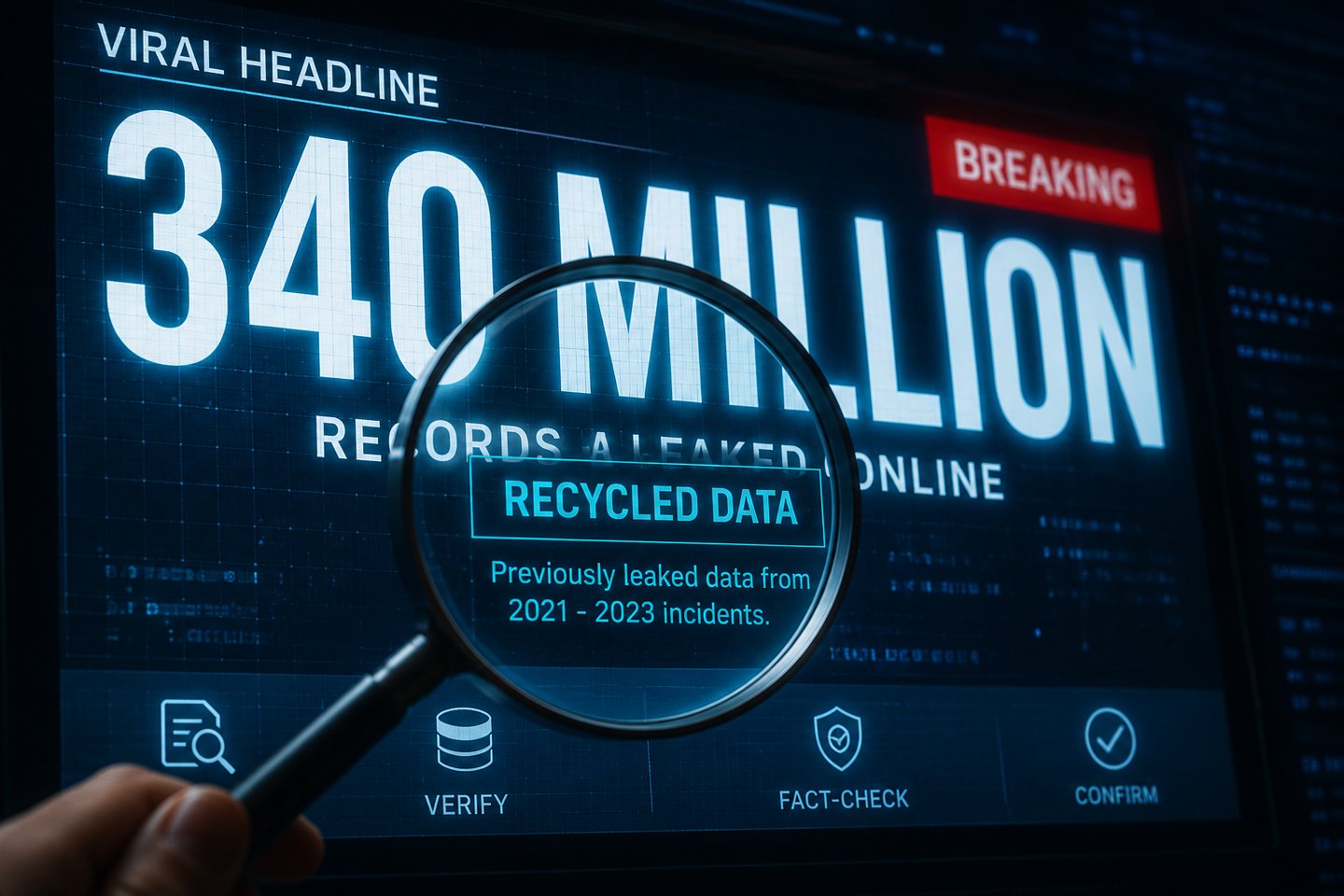
Every so often, a "massive hack" of a huge platform goes viral. Of course, some breaches are devastatingly real — like the Chinese state-sponsored hack of an FBI surveillance system earlier this year Billions of WhatsApp accounts, hundreds of millions of Gmail users, some enormous round number attached to a famous brand. The pattern is almost always the same. A seller takes old, recycled credential dumps and public data, brands it with a recognizable name, picks an intimidating number, and watches it spread. Researchers eventually pull it apart and find it dissolves into stale, repackaged information.
That doesn't make these compilations safe to ignore — correlation is a genuine threat. But it does mean you should approach every viral "mega breach" headline with informed skepticism. Ask: was the company's own server actually breached, or is this old data wearing a new label? The answer changes how worried you should be, and it's a question the viral posts almost never bother to ask.
In a media environment that rewards panic, being the person who pauses to check is a quiet superpower.
Frequently Asked Questions
Was OnlyFans actually hacked in 2026? No. Based on reporting from multiple cybersecurity outlets, statements from OnlyFans, and admissions from the seller themselves, OnlyFans' servers were not breached. The dataset being sold was allegedly compiled from older leaks on other platforms (like Twitter, Instagram, and Spotify) and public profile data, then matched against OnlyFans accounts.
Is my OnlyFans data at risk then? Possibly, but not because of a new breach. If your email, phone number, or username leaked from other services in the past and is publicly linkable to your OnlyFans account, that connection could be in compilations like this one. The risk is correlation of old data, not theft of new data.
Should I pay if someone threatens to expose my OnlyFans account? No. Never pay sextortion or blackmail demands. These messages are typically mass-sent bluffs using whatever public details the sender has. Paying marks you as a target and invites further extortion. Report it to the FBI's IC3 and the FTC instead.
How can I tell if a "mega breach" headline is real? Look for the key distinction: did the company's own servers get breached (a real breach), or was old data from elsewhere repackaged under a famous name (a compilation)? Check whether trusted researchers like Troy Hunt or established outlets have verified it. Round numbers matching a platform's user count and data that looks publicly visible are red flags.
What's the best single thing I can do to protect myself? Enable two-factor authentication on all important accounts and use unique passwords through a password manager. This ensures that leaked credentials from any single source can't be used to access your accounts, neutralizing the most common downstream threat from these data dumps.
The scariest headlines are often the least accurate. Real digital safety comes not from panicking at every viral claim, but from understanding how these threats actually work — and taking the boring, effective steps that protect you regardless of which "mega breach" trends next.
Found this useful? Share it with someone who saw the panic and didn't get the full story.
About the Author
Muhammad Ibraheem
Founder of Hackers Legacy | Cybersecurity Researcher & Privacy Analyst
Muhammad Ibraheem is a cybersecurity content creator with more than three years of experience producing educational content on ethical hacking, OSINT, privacy, and digital security. Through Hackers Legacy, he helps readers separate real cybersecurity threats from viral hype through research-driven analysis and educational content.
References & Further Reading

HACKERS LEGACY
Your ultimate knowledge for Ethical Hacking, Cybersecurity insights, digital products and a global community of curious minds.
LEARN . HACK . LEAD
Quick Links
Resources
Contact Us
> Email Us
> Response Time
Within 24 Hours
> World Wide Access
We are available globally.
©2026 Hackers Legacy
All righs reserved.
Built for learners
Secured for the future.