Chinese Hackers Just Hacked the FBI — Here's Exactly What They Stole
Chinese hackers reportedly breached FBI-linked systems in a major cyber espionage campaign. Discover what was stolen, how the attack happened, and what it means for cybersecurity in 2026.
NEWS
6/9/20267 min read
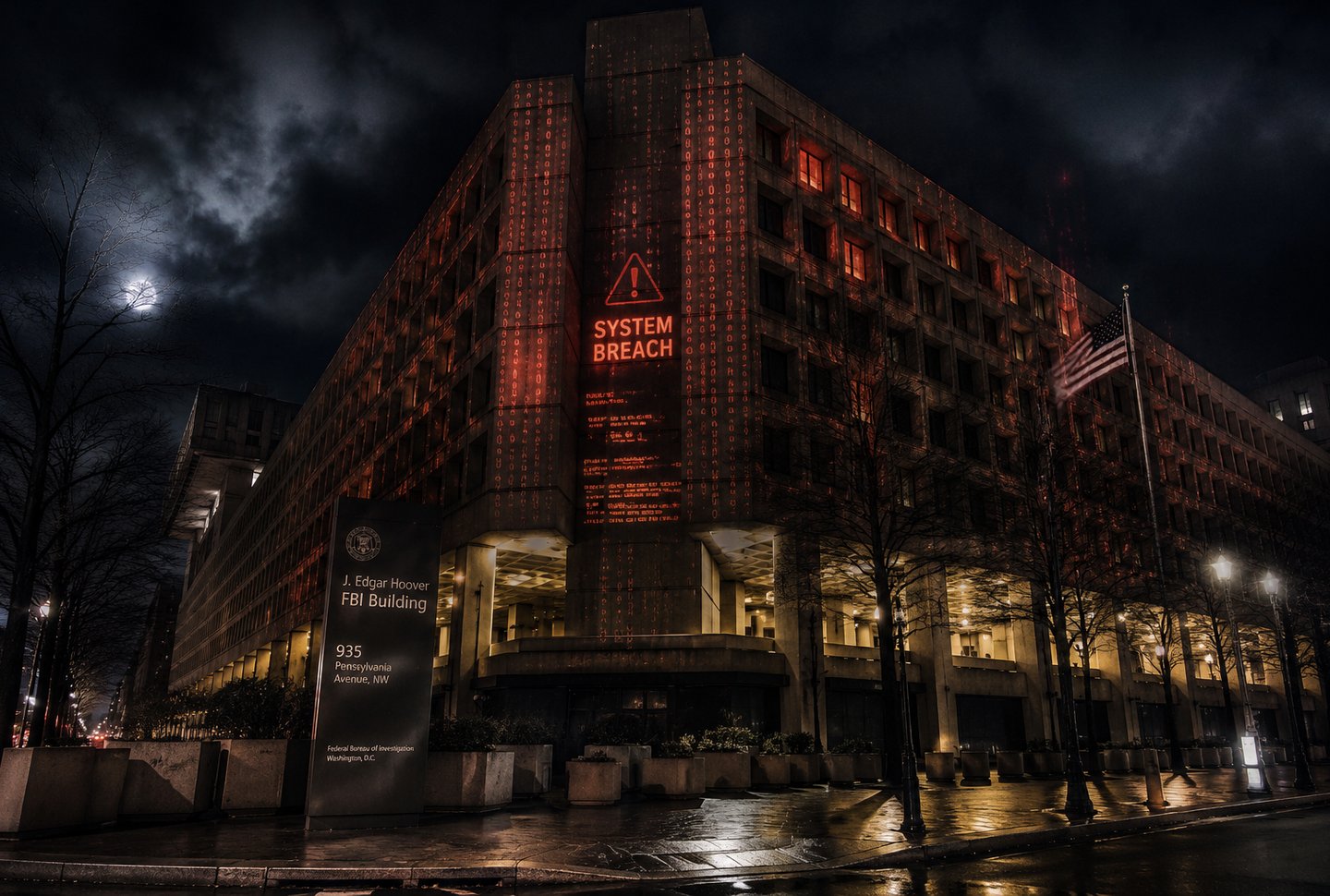
When people think about the FBI being hacked, they usually assume it's the stuff of spy movies — an elaborate heist, a rogue insider, maybe a Hollywood hacker in a dark room typing furiously.
The reality of what happened in early 2026 is far more unsettling. And far more quiet.
Chinese state-sponsored hackers didn't need a flashy operation. They didn't blow past firewalls or trigger alarms. They slipped through a commercial internet service provider's vendor infrastructure — a third-party back door that nobody had properly locked — and spent weeks inside one of the FBI's most sensitive internal systems before anyone noticed.
What they found inside was a counterintelligence goldmine.
The System Nobody Was Talking About Until Now
To understand what was stolen, you first need to understand what was breached.
Most people assume the FBI keeps its most sensitive data in classified, air-gapped vaults inaccessible from the internet. And for the most classified material, that's largely true. But modern law enforcement runs on interconnected digital infrastructure — and court-authorized surveillance operations, by legal design, have to connect to commercial telecommunications systems to function.
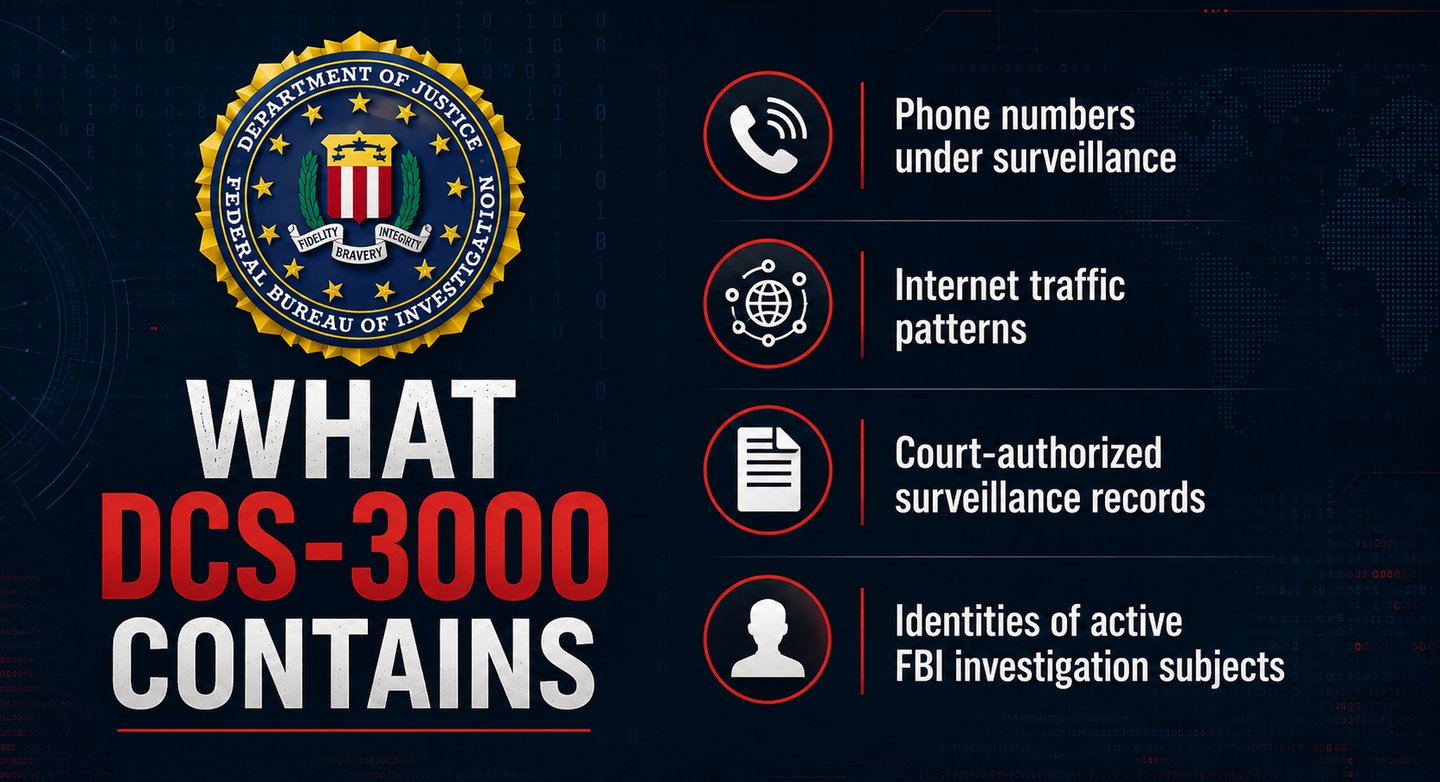
The system at the center of this breach is called the Digital Collection System Network — internally known as DCSNet, and specifically a component called DCS-3000, nicknamed Red Hook. According to reporting by HSToday and IBTimes UK, this is the FBI's internal infrastructure used to manage court-authorized wiretaps, pen registers, and foreign intelligence surveillance requests under FISA — the Foreign Intelligence Surveillance Act.
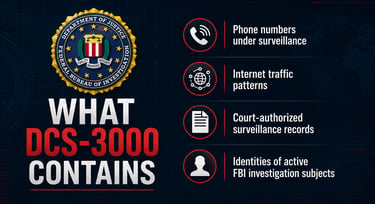
To be clear: DCS-3000 doesn't record the actual content of phone calls or messages. What it does hold is arguably more dangerous for national security purposes — surveillance metadata.
That means: the phone numbers being monitored, the internet traffic patterns being tracked, call routing data, and — critically — the identities of individuals currently under active FBI investigation.
In the wrong hands, that list is devastating.
Salt Typhoon: The Group Behind the Attack
On the morning of February 17, 2026, FBI analysts reviewing routine system logs at the bureau's offices in the Virgin Islands flagged something wrong. The log activity on the DCSNet infrastructure looked abnormal — the kind of pattern that doesn't come from internal users.
According to Politico's reporting and confirmed by NBC News, what followed was weeks of investigation. The FBI quietly confirmed the breach to TechCrunch in early March, saying it had "identified and addressed suspicious activities on FBI networks." By April 1, 2026, the situation had escalated: the FBI formally notified Congress that the intrusion had been classified as a "major incident" under FISMA — the Federal Information Security Modernization Act.
That designation is not handed out lightly. Under FISMA, a "major incident" classification is triggered only when a breach involves the compromise of personally identifiable information that could cause demonstrable harm to U.S. national security, foreign relations, public confidence, or civil liberties. Agencies are then legally required to notify Congress within seven days and loop in both CISA and the NSA.
Cynthia Kaiser, former deputy assistant director of the FBI's cyber division, told Politico that the threshold is "quite high" and that she was not aware of the FBI making such a determination about its own networks since at least 2020.
This was serious.
February 17, 2026: The Day the Alarm Went Off
Investigators did not have to search long for a suspect. The fingerprints matched a group they had already been hunting for years.
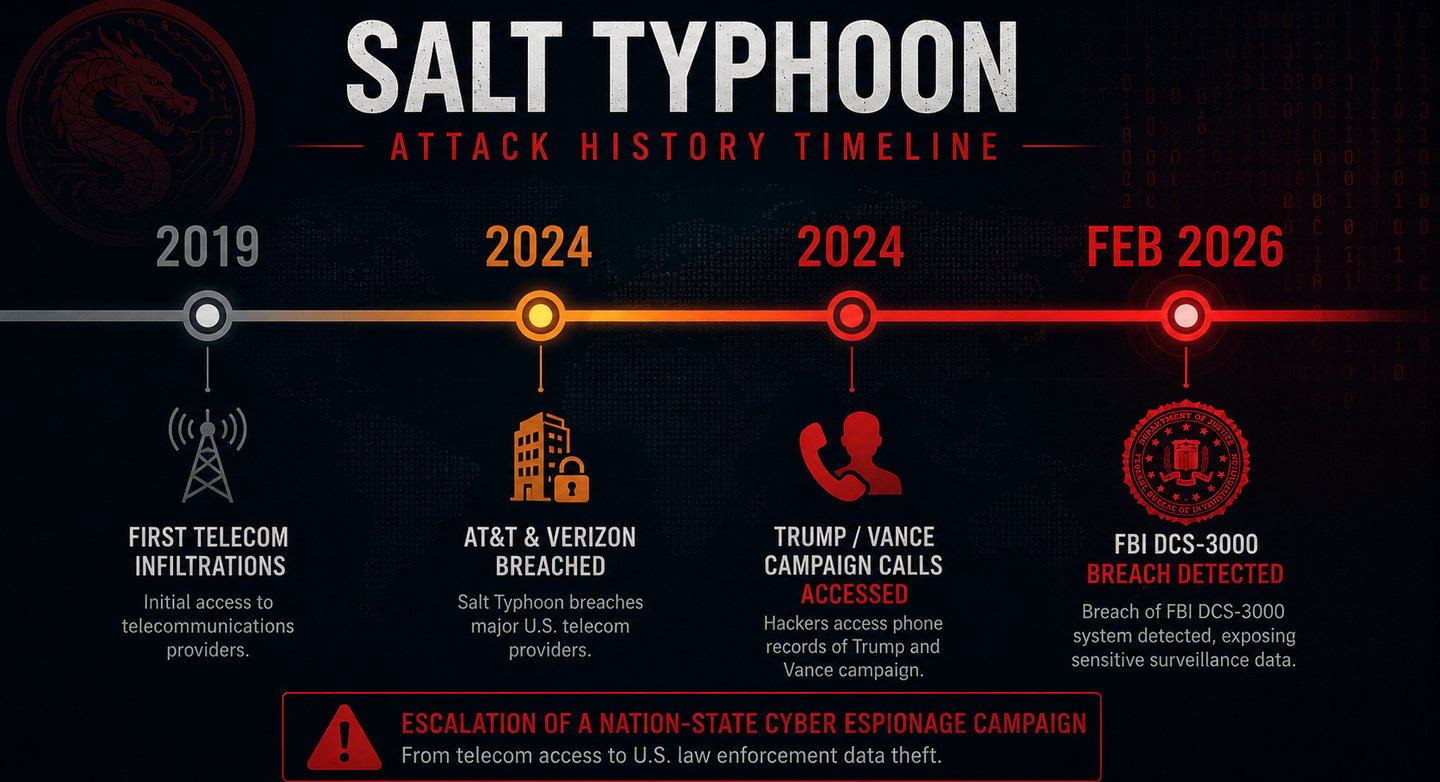
Salt Typhoon is a Chinese state-sponsored hacking group linked to China's Ministry of State Security (MSS) — Beijing's civilian intelligence agency. According to the FBI's own cybersecurity advisory, Salt Typhoon has been active since at least 2019 and has conducted one of the most sustained and damaging cyber-espionage campaigns ever directed at the United States.
Their track record before this breach was already alarming. Between 2019 and 2024, Salt Typhoon had breached all three major U.S. cellular providers, siphoning call records from tens of millions of Americans. In 2024, they went further — exploiting a 1994 law called CALEA (the Communications Assistance for Law Enforcement Act), which requires U.S. telecoms to maintain wiretap-ready infrastructure for government use. Salt Typhoon found that infrastructure and walked right in.
The result? As reported by Nextgov/FCW, their access during the 2024 telecom breaches included phone calls of major political figures — among them then-candidate Donald Trump and JD Vance during the presidential campaign. That operation was later described by U.S. officials as one of the largest intelligence compromises in American history.
The 2026 FBI breach is not a separate story. It is the next chapter of the same campaign.
How They Actually Got In
The method of entry tells the most important story for anyone in cybersecurity.
The FBI's congressional notice stated that the attackers gained access by "leveraging a commercial Internet Service Provider's vendor infrastructure" — language that security experts immediately recognized as describing a supply chain attack.
As Security Magazine reported, Salt Typhoon had used the exact same method in 2024 against AT&T and Verizon: exploit the commercial telecom infrastructure that CALEA mandates carriers maintain, and use it as a stepping stone into law enforcement systems. In 2026, they simply applied the same logic from the FBI's end of that chain.
Ross Filipek, chief information security officer at Corsica Technologies, told Cybernews that if Salt Typhoon's involvement is confirmed, "the impact could extend beyond a single incident into a sustained counterintelligence problem." He's right. The question isn't just what was taken. It's how long Beijing had eyes on FBI surveillance operations before the alarm was triggered.
The uncomfortable truth, noted by Security Boulevard, is that CALEA was written in 1994. Nobody mandated that the surveillance capability it created be hardened against state-sponsored adversaries. Senator Ron Wyden had proposed legislation to fix that gap after the 2024 telecom breaches. It went nowhere in Congress.
What This Means — And Why It's Worse Than It Sounds
Here is the part that most news coverage underplays.
Knowing who the FBI is currently investigating is not just sensitive information. In counterintelligence terms, it is potentially mission-critical for a foreign intelligence service. If Beijing knows which Chinese nationals, which U.S.-based assets, or which front companies are currently under FBI surveillance, they can warn those assets, change their communication patterns, burn their current operatives, and restructure their intelligence networks — all before investigators close in.
As Security Boulevard's analysis put it bluntly: "This is not smash-and-grab cybercrime. It is strategic intelligence collection designed to map and potentially neutralize American law enforcement capabilities."
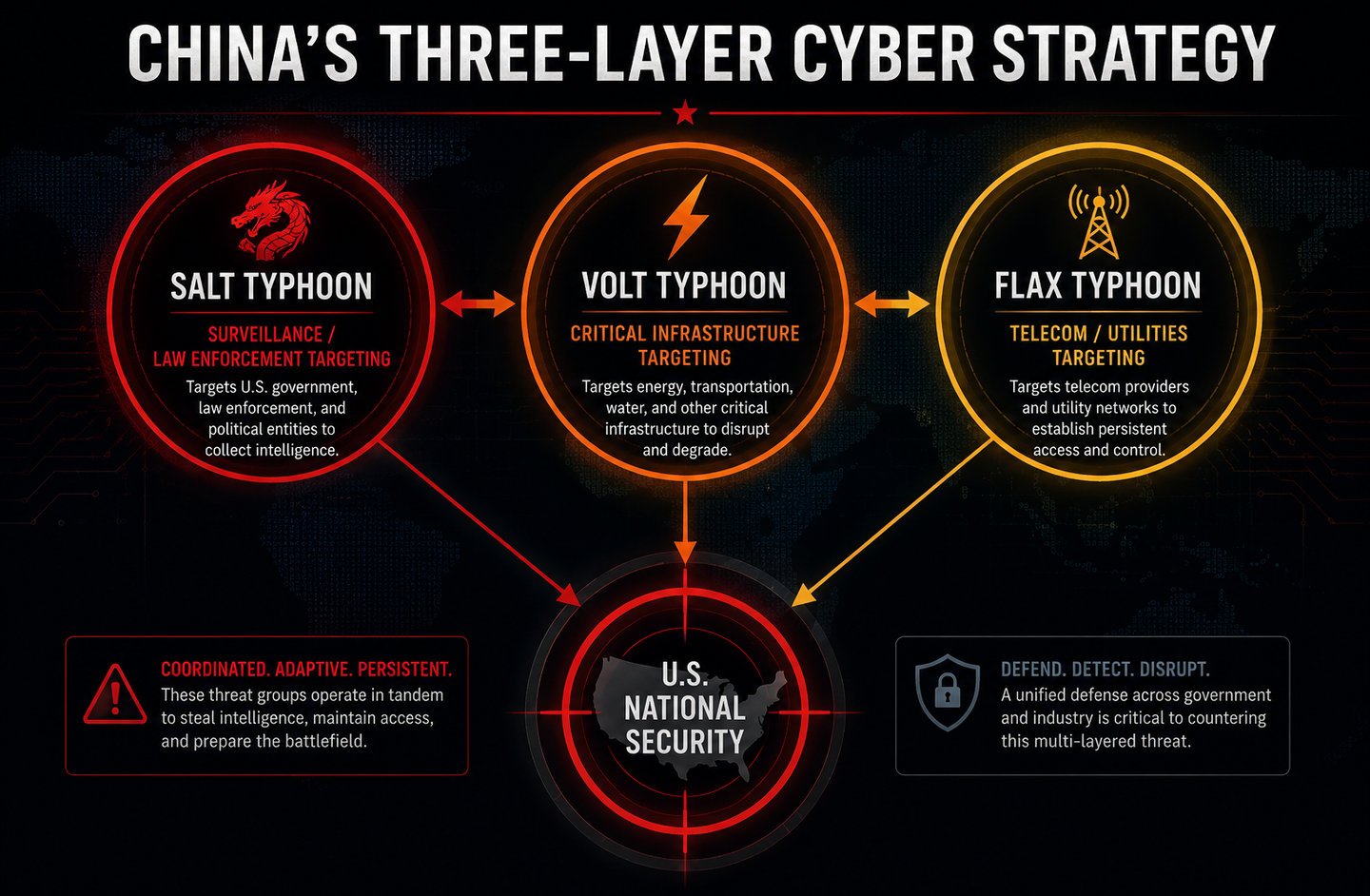
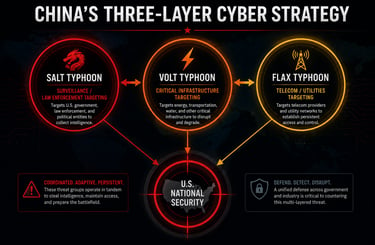
Two related Chinese hacking groups make this picture more alarming. Volt Typhoon has spent years embedding itself inside U.S. critical infrastructure — ports, water facilities, energy substations — pre-positioning for potential disruption during a future conflict. Flax Typhoon has targeted telecommunications and utility systems. Together, Salt Typhoon, Volt Typhoon, and Flax Typhoon form what analysts increasingly describe as a coordinated three-layer campaign: blind U.S. intelligence collection, compromise communications, disrupt physical infrastructure. In sequence.
What Comes Next — And What It Means for Everyday Americans
The FBI has stated it "identified and addressed" the suspicious activity on its networks. CISA and the NSA are involved in the response. Congressional committees are being briefed.
But the broader lesson here is not just about government systems.
Every major breach in the Salt Typhoon campaign — from the telecom hacks to the presidential campaign phones to this FBI intrusion — exploited the same category of vulnerability: trusted third-party infrastructure that was mandated by law but never properly secured for the threat environment of 2024 or 2026.
CALEA forced telecoms to build wiretap doors in 1994. Nobody seriously asked: what happens when a nation-state finds those doors? The answer, it turns out, is exactly what we are living through now.
For cybersecurity professionals watching this story, the takeaway is straightforward. Supply chain security is no longer a theoretical concern or a compliance checkbox. It is the dominant attack surface of sophisticated nation-state adversaries in 2026. The organizations most at risk are not necessarily the direct targets — they are the vendors, the ISPs, the third-party platforms that connect to those targets, and whose security posture is often far weaker than the agencies and companies they serve.
Frequently Asked Questions
Was classified information stolen in the FBI breach? Based on available reporting, the compromised system — DCS-3000/Red Hook — was unclassified but highly sensitive. It contained surveillance metadata, call records, and identities of investigation subjects, not classified intelligence content. However, for counterintelligence purposes, this metadata can be as damaging as classified data in the right hands.
Has China officially been blamed? No hacking group has been formally, publicly attributed by name in an official U.S. government statement specific to this breach. Multiple sources and investigative reports focus on Salt Typhoon as the primary suspect. China has consistently denied responsibility for Salt Typhoon operations.
What is Salt Typhoon's connection to the Chinese government? According to the FBI's own advisory and multiple U.S. intelligence assessments, Salt Typhoon is linked to China's Ministry of State Security — the civilian intelligence arm of the Chinese government. Its operations are consistent with state-directed intelligence collection rather than financially motivated cybercrime.
Could this happen to private companies too? The supply chain attack method Salt Typhoon used is not exclusive to government targets. Any organization that relies on third-party vendors, ISPs, or shared infrastructure is potentially exposed to the same approach. The FBI breach is a high-profile example of a vulnerability class that affects private sector organizations daily.
What should cybersecurity professionals take away from this? Vet your vendors as rigorously as your own systems. Legacy compliance mandates — like CALEA — create infrastructure that was never designed with modern adversaries in mind. Third-party access points are now the preferred entry vector for sophisticated threat actors. Defense strategies must account for the full supply chain, not just the perimeter.
This story continues to develop. The full scope of what was accessed — and what Beijing may have learned from it — may not be publicly known for years. What is already known is significant enough.
If you work in cybersecurity, government contracting, or national security — this is the breach you need to understand going into the second half of 2026.
References & Further Reading
NBC News — FBI Labels Suspected China Hack a "Major Cyber Incident"
HSToday — FBI Labels China-Linked Hack of Surveillance System a "Major Cyber Incident"
IBTimes UK — Chinese Cyberattack on FBI Systems Reveals Sensitive Surveillance Processes
Security Boulevard — FBI Surveillance Network Breached: Salt Typhoon's Quiet War
Security Magazine — Breach of FBI Surveillance System Considered a "Major Incident"
Nextgov/FCW — Suspected Chinese Breach Exposed Surveillance Targets' Phone Numbers
HACKERS LEGACY
Your ultimate knowledge for Ethical Hacking, Cybersecurity insights, digital products and a global community of curious minds.
LEARN . HACK . LEAD
Quick Links
Resources
Contact Us
> Email Us
> Response Time
Within 24 Hours
> World Wide Access
We are available globally.
©2026 Hackers Legacy
All righs reserved.
Built for learners
Secured for the future.