
Temu "Data Breach": 310 Million Records Claim Explained — Should You Worry?
Millions of Temu users are asking the same question: Was my data leaked? Here's everything you need to know about the alleged 310 million record breach, what experts found, and what you should do next.
NEWS
By Muhammad Ibraheem • Founder of Hackers Legacy • Cybersecurity Researcher & Privacy Analyst
7/12/20268 min read
The samples look recent. The number is unverified. The company denies everything. Here's how to make sense of a breach claim while it's still a moving target.
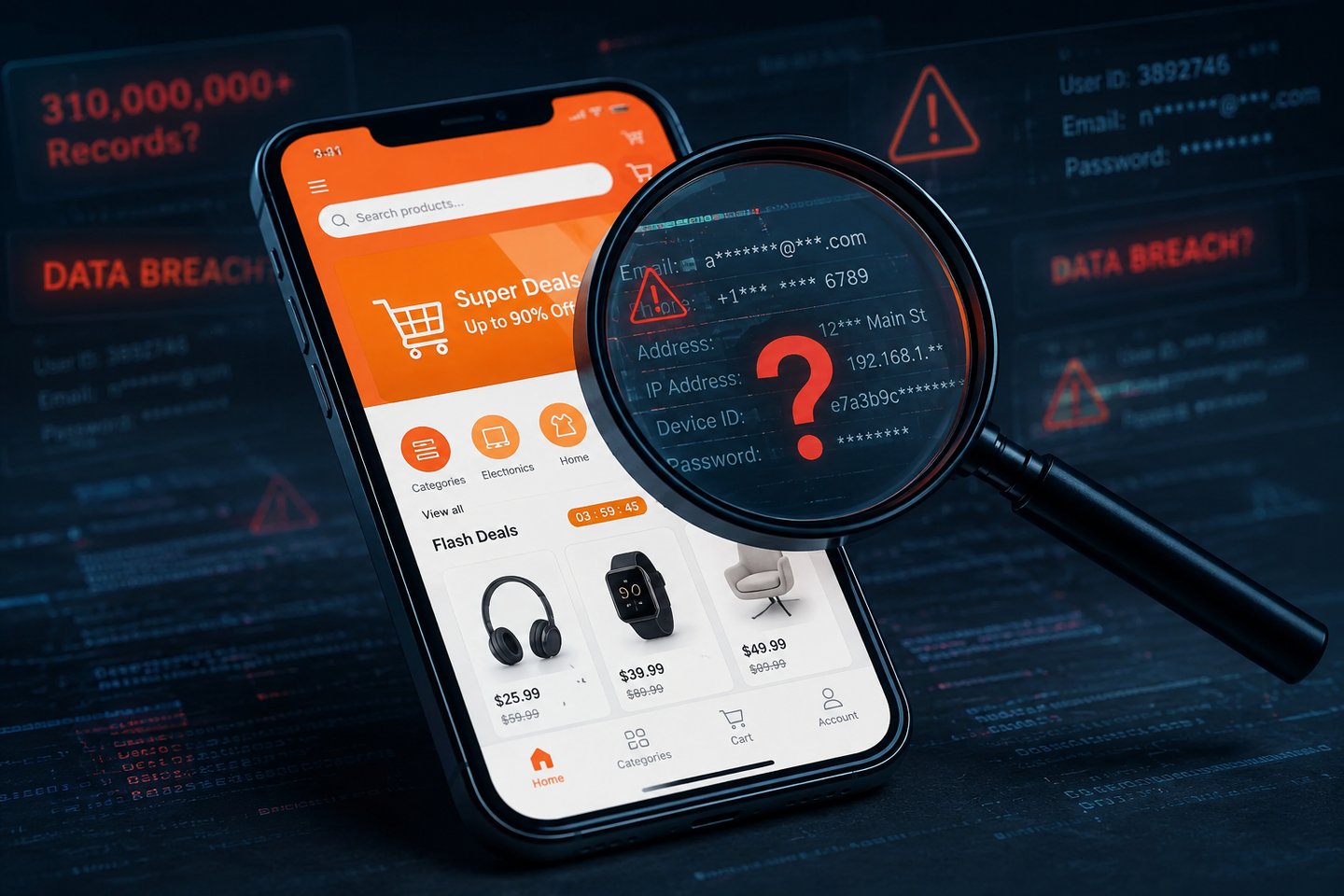
If you're one of the hundreds of millions of people who've ordered something ridiculously cheap from Temu, you probably saw the headlines and felt a familiar jolt of worry: "310 million Temu accounts leaked."
Take a breath. The situation is more complicated — and more interesting — than the headline suggests, and understanding the nuance will tell you exactly how worried you should actually be.
Here's the honest, up-to-date picture. A hacker is claiming to sell a massive database of Temu users. Temu categorically denies it was breached. And independent researchers have found something genuinely puzzling in the middle: the leaked samples look real and recent, but the claimed scale can't be verified. That tension is the whole story, and I'll walk you through all of it — plus the specific steps every Temu shopper should take right now, regardless of how this shakes out.
What Actually Happened
In late June 2026, a threat actor posted a listing on a cybercrime forum offering what they claimed were 310 million Temu user records for sale. The asking price was strikingly low — reportedly around $700 for the entire database.
To back up the claim, the seller published 99 sample records. When researchers at Cybernews examined those samples, they found each one contained a broad range of account information: names, email addresses, phone numbers, bcrypt password hashes, device information, IP addresses, and account metadata.
Two details from that analysis matter enormously.
First, nearly all the sample records contained account-creation or login timestamps from 2026. That suggests the data — whatever its true source — is relatively recent, not recycled from some ancient breach. This is the key difference from many "mega leak" claims that turn out to be old data in new packaging.
Second, based on the structure of those samples, researchers believe the data may have originated from an internal account management system or a third-party service that handles Temu user accounts — not necessarily from Temu's core systems directly.
But here's the crucial caveat researchers themselves emphasized: there is no way to verify the seller's claim of 310 million records. The 99 samples could be real while the "310 million" figure is pure marketing to attract buyers.
Temu's Response: A Flat Denial
Temu didn't hedge. The company issued a firm, categorical denial.
A Temu spokesperson stated that its security team conducted a comprehensive investigation and confirmed the claims are false, insisting the circulating data did not come from their systems. The company went further, pointing to its security credentials: a Mobile Application Security Assessment (MASA) certification, a partnership with HackerOne for vulnerability disclosure, two-factor authentication, membership in the Anti-Phishing Working Group, and PCI DSS compliance for payment security. Temu also said it takes attempts to spread false information seriously and reserves the right to pursue legal action.
That's about as strong as a corporate denial gets. But — and this matters for thinking clearly — a company denial is not automatically the final word either. Companies have reputational and legal incentives to deny. Independent verification is what settles these questions, and that verification is still pending.
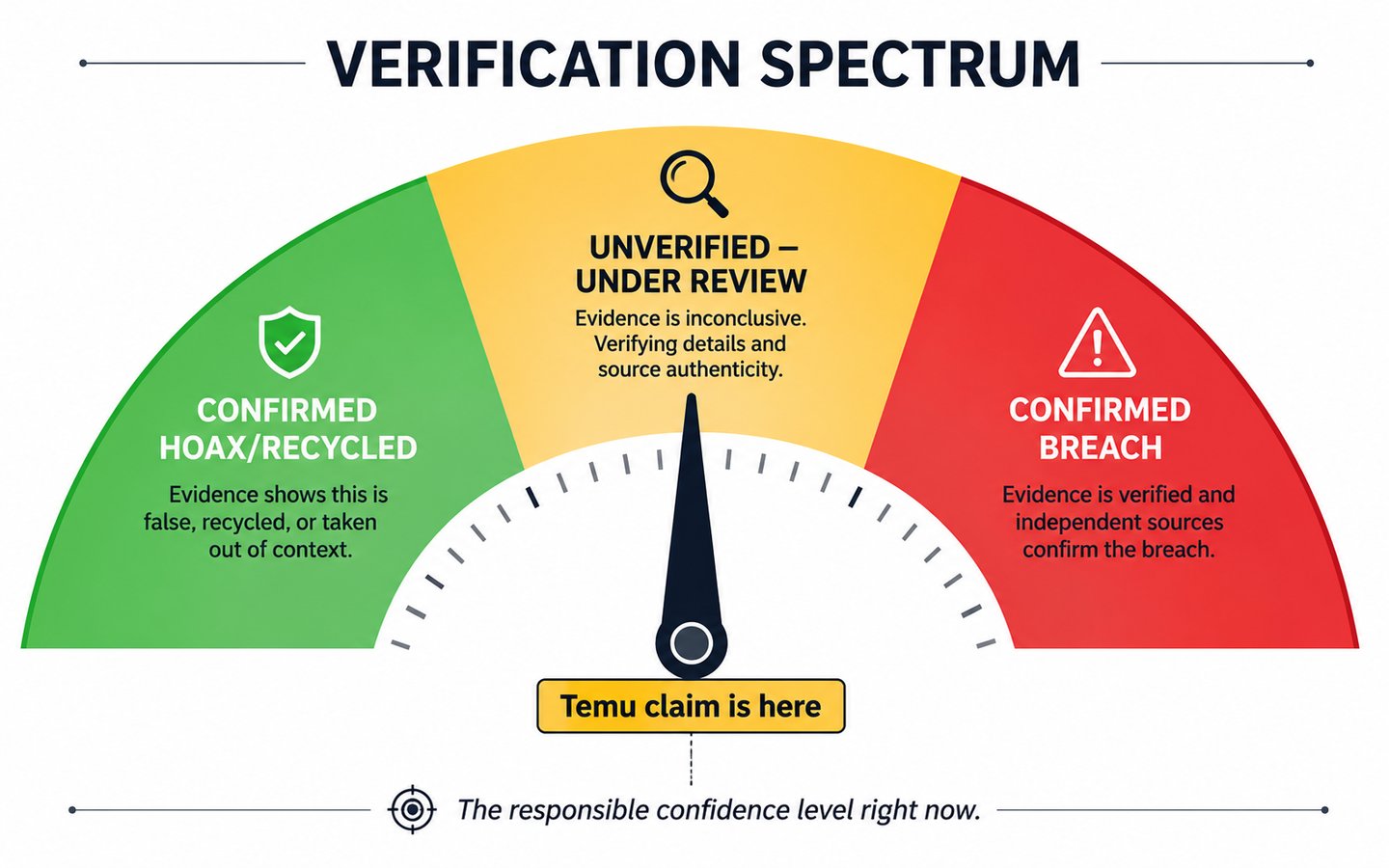
So we're left in the honest, uncomfortable middle ground that defines every fast-moving breach story in its first days: an unverified claim under review. Not a confirmed breach. Not a confirmed hoax.
This Has Happened Before — And That's a Clue
Here's a piece of context most coverage leaves out, and it's genuinely useful for judging the current claim.
This isn't the first time Temu has been at the center of a breach claim. Back in 2024, a threat actor using the alias "smokinthashit" claimed to have stolen 87 million Temu records and put them up for sale on BreachForums. Temu issued a nearly identical denial, saying not a single line matched their transaction records.
And that 2024 story had a revealing ending: the threat actor was eventually banned from the forum for misrepresenting publicly available data as a genuine breach. Security researchers who investigated found that some of the data appeared to trace back to a completely different company's breach from 2021 — nothing to do with Temu at all.
Does that prove the 2026 claim is also bogus? No. The 2026 samples look more recent and more specific than the 2024 ones did. But it establishes an important pattern: high-profile brands like Temu are repeatedly used as bait in breach listings precisely because their names generate headlines and attract buyers. Skepticism isn't cynicism here — it's the historically-justified default.
So Should You Worry? Here's the Honest Answer
Let me give you the answer that fear-mongering headlines won't.
Whether or not Temu's own servers were breached, the practical risk to you as an individual comes down to one question: could credentials connected to your Temu account be circulating somewhere? And the uncomfortable reality is that in 2026, for most people, the answer to "are some of my credentials exposed somewhere" is already yes — from this claim or any of a hundred others.
Even though the passwords in these samples are hashed (scrambled using bcrypt, a strong algorithm), that protection isn't absolute. If attackers crack weak passwords, or if you reused your Temu password on other sites, the exposed information could fuel credential stuffing, phishing, and social engineering attacks. That risk exists independent of whether this specific claim is verified.
So the smart posture isn't panic, and it isn't dismissal. It's this: treat it as a useful reminder to shore up defenses that protect you against every breach claim, verified or not. The steps below do exactly that.
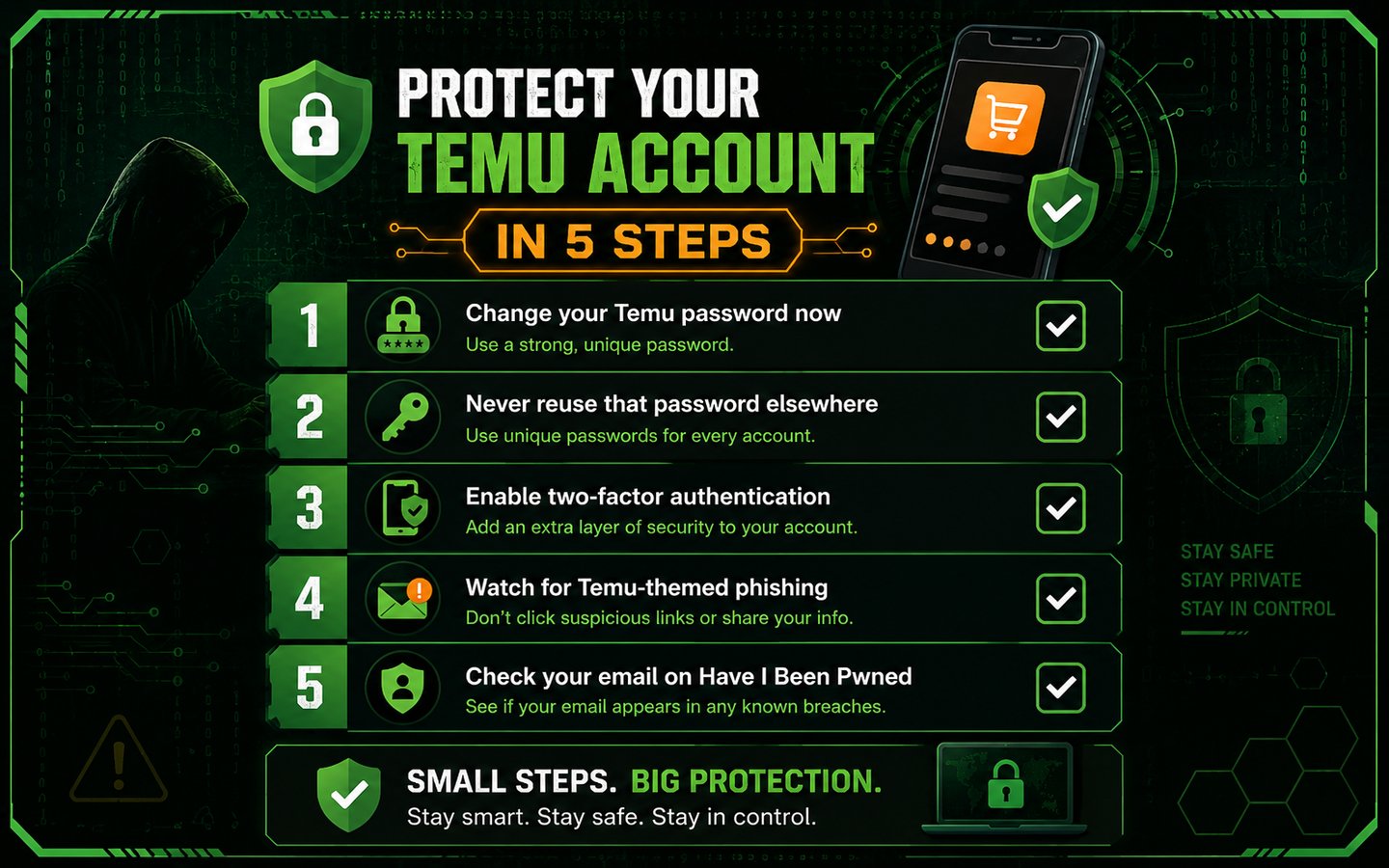
What Every Temu User Should Do Right Now
These steps are worth doing whether this claim proves true or false. They protect you against this and every future breach.
1. Change your Temu password immediately. It costs you two minutes and eliminates the risk from any exposed credential tied to your account. Choose something strong and completely unique.
2. Never reuse that password anywhere else. This is the single most important habit. The real danger of any leaked credential is "credential stuffing" — attackers taking a leaked email/password pair and trying it on your email, your bank, your other shopping accounts. A unique password per site means one leak can never cascade. A password manager like Bitwarden makes this effortless by generating and remembering unique passwords for you.
3. Enable two-factor authentication. Temu supports 2FA, and turning it on means that even if your password is exposed, an attacker still can't log in without a second code. Enable it on your Temu account, and more importantly, on your email and banking accounts. Use an app like Authy where possible.
4. Stay alert for Temu-themed phishing. When a breach claim goes viral, scammers pounce. Expect a wave of emails and texts claiming to be from Temu about "suspicious activity" or "verify your account," designed to steal your login. Don't click links in these messages — open the Temu app directly instead. Temu will never ask for your password via email.
5. Check your broader exposure. Run your email addresses through HaveIBeenPwned to see which breaches your data has appeared in overall. This gives you a fuller picture of what's already circulating about you, beyond this single claim.
The Bigger Lesson: Stop Waiting for Certainty
There's a mindset shift buried in this story that's worth more than any single breach update.
People often freeze during these events, waiting to find out whether a breach is "real" before doing anything. But that waiting is exactly backwards. The protective steps — unique passwords, 2FA, phishing awareness — are identical whether the Temu claim is verified, debunked, or never resolved at all. You don't need to know the truth of any specific headline to be protected from it.
That's genuinely liberating once it clicks. Instead of anxiously refreshing news pages to learn if you should panic, you build defenses once that make every future breach claim a shrug instead of a scramble. The people genuinely harmed by leaks like this are those reusing one password everywhere with no 2FA. Everyone else mostly reads the headline, checks that their defenses are in place, and moves on with their day.
Be that second kind of person. The data may or may not be real — but your protection can be, starting today.
Frequently Asked Questions
Was Temu actually hacked in 2026? As of now, it's unverified. A threat actor claims to be selling 310 million Temu records, and while researchers found the leaked samples appear recent and genuine-looking, the claimed scale can't be confirmed and Temu has categorically denied that the data came from its systems. The responsible position is "unverified claim under review," not a confirmed breach.
Is my Temu password safe if it was in the leak? The sample passwords were hashed with bcrypt, a strong algorithm, which provides meaningful protection. However, weak passwords can still be cracked, and if you reused your Temu password elsewhere, that's a real risk. Change your Temu password to something strong and unique regardless, and enable two-factor authentication.
Has Temu been accused of a breach before? Yes. In 2024, a hacker claimed to sell 87 million Temu records. Temu denied it, and the threat actor was later banned from the forum for misrepresenting publicly available data (some traced to a different company's 2021 breach) as a Temu hack. This history is why researchers approach new claims with caution.
Should I stop using Temu because of this? That's a personal choice. There's no confirmed breach of Temu's systems in the public record. Separately, Temu has faced regulatory scrutiny and lawsuits over its data collection practices in some countries, which is a different issue from a hack. If you continue using it, follow the protection steps above.
How can I tell if a data breach claim is real? Look for independent verification from trusted researchers (like Cybernews or established outlets), check whether sample data has been validated, and watch for the company's official response. Be skeptical of round numbers attached to famous brands and suspiciously low asking prices, which are common signs of exaggerated or fabricated claims. Expect headline numbers to change as evidence emerges.
In a world where breach claims arrive faster than anyone can verify them, the winning move isn't chasing certainty on each one. It's building protection that doesn't care whether any single claim is true.
Found this useful? Share it with someone who shops on Temu — especially anyone who uses the same password everywhere.
References & Further Reading
Muhammad Ibraheem
Founder of Hackers Legacy | Cybersecurity Researcher & Privacy Analyst
Muhammad Ibraheem is a cybersecurity content creator with more than three years of experience producing educational content on ethical hacking, OSINT, privacy, and digital security. Through Hackers Legacy, he helps readers separate real cybersecurity threats from viral hype through research-driven analysis and educational content.
About the Author
Cybernews — 310 Million Temu Records Allegedly Surface
BleepingComputer — Temu Denies 2024 Breach Claim
SC Media — Temu Refutes Data Compromise Claim
TechRadar — Temu Denies Breach Coverage
Have I Been Pwned — Check Your Email for Breaches
Bitwarden — Free Password Manager
Authy — Two-Factor Authentication App

HACKERS LEGACY

Your ultimate knowledge for Ethical Hacking, Cybersecurity insights, digital products and a global community of curious minds.
LEARN . HACK . LEAD
Quick Links
Resources
Contact Us
> Email Us
> Response Time
Within 24 Hours
> World Wide Access
We are available globally.
©2026 Hackers Legacy
All rights reserved.
Built for learners
Secured for the future.